Thursday, February 20, 2014

Arizona Religious Freedom Bill Riles Gay Rights Supporters


Townhall.com:
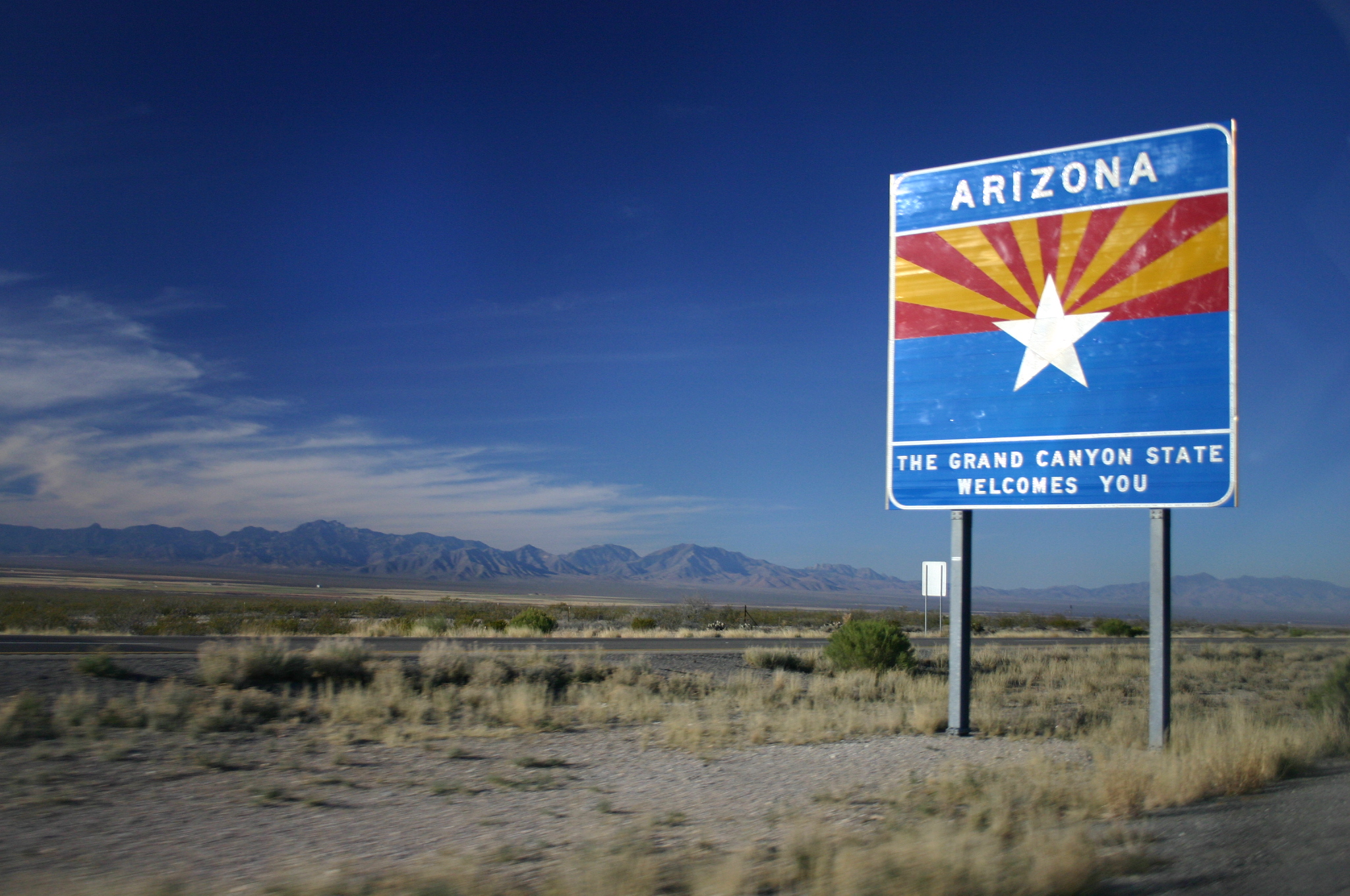
The Arizona Legislature gave final approval Thursday evening to legislation that allows business owners asserting their religious beliefs to refuse service to gays, drawing backlash from Democrats who called the proposal "state-sanctioned discrimination" and an embarrassment.

The 33-27 vote by the House sends the legislation to Republican Gov. Jan Brewer and puts Arizona back at the forefront of a polarizing piece of legislation four years after the state enacted an immigration crackdown that caused a national furor.

Similar religious protection legislation has been introduced in Ohio, Mississippi, Idaho, South Dakota, Tennessee and Oklahoma, but Arizona's plan is the only one that has passed. The efforts are stalled in Idaho, Ohio and Kansas.

Republicans stressed that the bill is about protecting religious freedom and not discrimination. They frequently cited the case of a New Mexico photographer who was sued after refusing to take wedding pictures of a gay couple and said Arizona needs a law to protect people in the state from heavy-handed actions by courts and law enforcement.

The bill allows any business, church or person to cite the law as a defense in any action brought by the government or individual claiming discrimination. It also allows the business or person to seek an injunction once they show their actions are based on a sincere religious belief and the claim places a burden on the exercise of their religion.

The legislation prompted a heated debate on the floor of the House, touching on issues such as the religious freedom, constitutional protections and civil rights.

Opponents raised scenarios in which gay people in Arizona could be denied service at a restaurant or refused medical treatment if a business owner thought homosexuality was not in accordance with his religion. 

One lawmaker held up a sign that read "NO GAYS ALLOWED" in arguing what could happen if the law took effect, drawing a rebuke for violating rules that bar signs on the House floor.

Democrats also said there were a host of other scenarios not involving sexual orientations where someone could raise their religious beliefs as a discrimination defense.

The bill is backed by the Center for Arizona Policy, a social conservative group that opposes abortion and gay marriage. The group says the proposal is needed to protect against increasingly activist federal courts and simply clarifies existing state law.

"We see a growing hostility toward religion," said Josh Kredit, legal counsel for the group.

All but three Republicans in the House backed Senate Bill 1062 Thursday evening. All three House Republicans who broke ranks said they had problems with the proposal, though none elaborated at length.

"I disagree with the bill," said Rep. Ethan Orr. "I think it's a bad bill."

The two others were Reps. Heather Carter and Kate Brophy McGee.

The Senate passed the bill a day earlier on a straight party-line vote of 17-13.

Brewer doesn't comment on pending legislation, but she vetoed a similar measure last year. That action, however, came during an unrelated political standoff, and it's not clear whether she would support or reject this plan.
RELATED:  Arizona Senate: Business owners can cite religion to refuse service to gays

Wednesday, February 19, 2014

George W. Bush Found the Solution to America's Healthcare Crisis Seven Years Ago, Too Bad Nobody Listened


The Congressional Budget Office’s warning that the Affordable Care Act will cause employment to fall by the equivalent of 2.5 million full-time workers is just the latest of Obamacare’s negative surprises. Unfortunately, House Minority Leader Nancy Pelosi’s statement that “we have to pass the bill so that you can find out what is in it” is proving to be depressingly accurate. 
The law’s defenders legitimately argue that it is not sufficient merely to criticize the Affordable Care Act; responsible action requires proposing an alternative. Fortunately, Republicans have a good one, and it’s been hiding in plain sight for the past seven years. The plan was first described in President George W. Bush’s 2007 State of the Union Address, but it remains timely. This plan would remedy most of the major problems that exist in America’s health care system and cause less destruction with fewer adverse consequences than Obamacare. 
There are two main problems associated with health care in the United States today. First, it is expensive. Health economists, among them Daniel Kessler at Stanford, have shown convincingly that the United States spends a larger share of its gross domestic product on health care than other countries (for example, about one-and-a-half times what Switzerland spends per capita) because of inappropriate incentives to use care efficiently. Patients who have insurance or rely on state funds to cover their expenses bear little of the cost of any treatment received, which causes them to use health resources as if they were almost free. This means that health care is overused and the scarce resources do not always go to those who need them most. Part of this is a result of a Tax Code that subsidizes expensive plans, which have low co-payments and overly extensive coverage. The second problem is the large number of uninsured Americans who do not have reasonable access to health care and who obtain the health care that they do receive in inefficient ways, such as using emergency rooms for minor ailments. 
So what would the ideal alternative to Obamacare look like? It should provide cost-effective care and the quality treatment that Americans deserve. Effective reform should discourage over-insurance that results from the subsidy of so-called Cadillac plans that pay for basic, inexpensive and predictable proceduresand have patient co-payments that are too low. Reform should encourage consumers to use America’s scarce health resources efficiently by inducing them to get tests and treatments that are justified instead of those that are selected because they are almost free to the decision-makers. Finally, reform should make health insurance available to the vast majority of Americans, some of whom cannot afford insurance without help. 
The Bush 2007 plan achieves these goals. The basic structure is to offer all Americans a standard tax deduction, in 2007 set at $15,000 for families and $7,500 for individuals. The deduction would apply to payroll tax — both employee and employer contribution — as well as to income tax. Importantly, the size of the deduction would be independent of the amount spent on the plan. Any taxpayer who has a plan that includes catastrophic coverage gets the full deduction, irrespective of the plan’s cost. That is important because it creates the incentives to choose efficiently. A family that wanted to spend less on the plan than the value of the deduction would pocket the difference. A family that wanted to spend more on a plan than the value of the of the deduction would bear the additional cost out of pocket. As a consequence, consumers would reap the full benefit of keeping the cost of their plan low, which prompts them to shop and choose effectively. If the extra coverage offered by a $10,000 plan over an $8,000 one is not worth at least $2,000 to the consumer, he will not purchase it. 
Under the current system, part of the cost is borne by others because the tax system does not treat employer-provided health insurance as income. As a consequence, a dollar spent by the employer or worker costs less than a dollar to that worker. The Bush plan would eliminate that distortion, replacing the non-taxed status of employer-provided health insurance with the standard deduction. By eliminating the link to employers, health insurance becomes more like auto insurance, where the consumer has appropriate incentives to shop around. Other features of the Bush proposal include allowing the purchase of plans across state lines to enhance competition and reform of medical liability to reduce the amount of defensive medicine.
RELATED: HEALTH CARE: Latinos lag in Obamacare enrollments

Tuesday, February 18, 2014

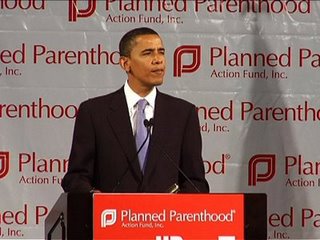
Former Planned Parenthood Worker Marianne Anderson: “Money-Grubbing, Evil, Very Sad, Sad Place to Work”


Archindy.org:
Marianne Anderson recently drove with her mother past the Planned Parenthood facility at 86th Street and Georgetown Road in Indianapolis, the state’s largest provider of abortions.

“I told my mom, ‘To think that that building exists for no other reason than to kill unborn babies.’ I still get a knot in my stomach when I drive by there.”

The knot returns despite the fact that Anderson hasn’t worked at the Planned Parenthood facility since July of 2012. Prior to that, she worked for two-and-a-half years as a nurse at the abortion center.

The mother of two and grandmother of one has begun to talk about her experiences at the abortion facility.
Anderson, who now works as a nurse at Community North Hospital, shared her story at two recent events sponsored by the Great Lakes Gabriel Project, which offers help and support to women in crisis pregnancies. Many Catholics across central and southern Indiana are involved in this pro-life initiative.


The following are excerpts from a recent interview she had with The Criterion, during which Anderson revealed her experiences at the Planned Parenthood facility and the support she received from members of the Great Lakes Gabriel Project in her efforts to leave.
 

Q. When and why did you start working for Planned Parenthood?
A. “I started working for Planned Parenthood in 2010 to start up their conscious sedation program [which allowed clients to purchase mild to moderate sedatives to be given intravenously before an abortion]. Plus the job was very close to my house.”
 

Q. Did you know what they were about, what they did?
A. “I did. And I must admit I was kind of on the fence about abortion. I think a lot of it came from working at Wishard [Hospital], and seeing girls that had attempted abortion themselves and ended up with hysterectomies, or boyfriends beating them because they were pregnant. My thought was, ‘Well, you need a safe place [for an abortion]. People shouldn’t be doing it on their own. And people are going to be doing it anyway, so why not provide them a safe place to do it?’ ”
 

Q. When did you start having qualms or misgivings about working for Planned Parenthood?
A. “I started feeling uneasy working there when people came from [the] national [office] in New York City to teach us the conscious sedation process. It was disgusting. These two ladies had this chant they would do: ‘Abortion all the time!’ I thought, ‘I’ve got to get out of here.’ That was about six to eight months after I started.

“Those women from New York acted like an abortion was a rite of passage. They were like, ‘How can you not offer abortion to women? It’s their body. They should be able to do whatever they want. How can you force them to have a baby? Abortion should be free to anybody, anytime.’ ”
 

Q. How many abortions are done at the Georgetown facility per day?
A. “In the upper 20s to low 30s, including medical abortion by pill. Abortions are done there every Tuesday and Friday, and then they alternate between Thursday and Saturday.”
 

Q. Were there ever any difficulties with the abortion procedures?
A. “Several times, there were difficulties with abortions while I worked there, where they had to call the hospital to come pick the woman up.

“One girl almost bled out. She was passing clots, her blood pressure was dropping.

“A lot of the cases we had were from excessive bleeding or reactions to the sedation.

“When we had to call 911 for an ambulance, we were told never to say the word ‘abortion’ because they don’t want that broadcast. They knew that the calls were recorded, and could be made public.”
 

Q. What was it like working there?
A. “It was a money-grubbing, evil, very sad, sad place to work.

“We would get yelled at if we didn’t answer the phone by the third ring. They would tell us we’d be fired [if we didn’t] because they needed the money.

“They would remind us in our weekly staff meeting that we need to tell everyone [who called to schedule an appointment] to avoid ‘those people’ [the sidewalk counselors] because we need the money. We were to tell them, ‘Don’t make eye contact with them, and don’t stop in the driveway. If you make eye contact with them or if you stop and roll down your window, they’re going to try their darnedest to talk you out of it.’

“You have to have so many [abortions] a month to stay open. In our meetings they’d tell us, ‘If abortions are down, you could get sent home early and not get as many hours.’

“They would allow girls to have ultrasounds that were obviously way too far along [the legal limit for having an abortion in Indiana is 13 weeks and six days]. They said, ‘If they want to be seen, you just put them through, no problem,’ just taking advantage to make money.

“I was always getting in trouble for talking too long to the girls, asking if they were sure they wanted to do this.

“It was absolutely miserable going in there.”
 

Q. What experiences stick with you?
A. “One young girl came in with her mom. She was about 16. Her mom had made the appointment. That’s not supposed to be how it works. It’s supposed to only be the patient who makes the appointment. I checked her in, and she thought she was there for a prenatal checkup. The mom was pushing it. She blindsided her own daughter.

“This guy brought in a Korean girl. I had no doubt in my mind this girl was a sex slave. This guy would not leave her side. They could barely communicate. He wanted to make all the arrangements.

“During the ultrasound, she told one of the nurses that there were lots of girls in the house, and that the man hits them. She never came back for the abortion. I always wondered what happened to her. One of my co-workers said, ‘You’re better off to just let it go.’

“These girls would start crying on the table, and Dr. [Michael] King [the abortion doctor for whom Anderson worked] would say, ‘Now you chose to be here. Sit still. I don’t have time for this.’

“One doctor, when he was in the POC [products of conception] room, would talk to the aborted baby while looking for all the parts. ‘Come on, little arm, I know you’re here! Now you stop hiding from me!’ It just made me sick to my stomach.

“The sound the suction machine made when it turned on still haunts me.”
 

Q. Did you ever interact with the sidewalk counselors?
A. “One day I was coming in, and I’d written out a note to one of the [sidewalk counselors] that said, ‘I’ve worked here for a little over two years. I’m actively looking for something else. Please pray for me. I don’t want to be here.’ All I could do was hand it to her. She tried to give me a pamphlet, but I told her no, I had to go because there are cameras that watch the drive.”
RELATED: Obama boosts budgets for Planned Parenthood, other assistants of health care enrollment

The Vetting of Hillary Clinton Already Labeled ‘Sexist’ in the Liberal Media


Of course, none of these fools can recall the sexist stuff Sarah Palin went through:
It was bound to happen sooner rather than later. MSNBC host Mika Brzezinski issued on Monday what might be the most full-throated attack on Hillary Clinton’s opponents yet over what she considered their appeals to misogyny and sexism.

Sen. Rand Paul (R-KY) recently embarked on a campaign designed to make Democrats think twice about labeling Republican opposition to late-term abortions and contraception coverage mandates as offensives in the “War on Women.” Paul noted that the party attacking the GOP also lionizes a man who engaged in sexual activity with a subordinate in the workplace. The mere mention of this incontrovertible fact has worked Clinton’s supporters up into a fury. 

“Any Republican who is dredging this up is a misogynistic sexist hypocrite,” Brzezinski declared, “because if Bill Clinton can win again with all of these problems, and Hillary Clinton, they can bring down because of this, and they think they can each go after it, they are clueless, and they are complete sexists because it’s not even her affair.”

No one said it was, but the new rules being applied to the vetting of a potential presidential candidate and his/her spouse is instructive. One imagines Ann Romney would have appreciated Brzezinski coming to her defense when she was mocked for riding a horse as a therapeutic regimen to alleviate symptoms associated with her multiple sclerosis. That segment is nowhere to be found, but Brzezinski and her co-host did enjoy a good laugh at Mrs. Romney’s expense on occasion, once while repeatedly alluding to her husband’s phallus.
But back to Republicans and their overt sexism.

Brzezinski is not the first to attempt to brand the final years of the Clinton presidency off-limits. In a staggering CNN segment last week, anchor Michaela Pereira dismissed the talk of Clinton’s reaction to the Lewinsky affair as both old news and suspiciously prejudiced.

“Some would argue, it takes two to tango,” she said when discussing Paul’s charge that Bill Clinton used his power to take advantage of an intern in the workplace. “There is a reason we do not have ‘take your spouse to work day’ in America,’” Newsday columnist Ellis Henican agreed.

The Clinton presidency is not the only part of Hillary Clinton’s past deemed unsuitable for public discourse. In January, news broke that Clinton’s 2008 campaign maintained an “enemies list” of former allies who had betrayed her and backed Obama for the nomination. Even the mere mention of this story was deemed sexist. 

“There’s a gender element here,” said University of Texas professor Victoria DeFrancesco Soto. “If a guy has a list of people he’s not too keen on, no big deal, but if a woman does, then that is a big deal and it becomes juicy.”

To discuss Clinton like she was any other politician, and not just a female politician, is now defined as sexist. DeFrancesco Soto’s critique would be poignant if she could point to an instance where a male politician maintaining an “enemies list” was dismissed as commonplace. But exacting political retribution against ideological opponents has never been shrugged off as just something boys are wont to do. 
RELATED:  Mika Begs ‘Misogynistic Sexist’ Republicans to Keep Going After Hillary Over Lewinsky Affair

Monday, February 17, 2014

Barack Obama: California Central Valley Drought Due to Climate Change


Of course, it must be global warming:
While the East Coast and Midwest suffer through a cold and snow-heavy winter, the people of California are in the midst of a drought — and a particularly bad one, even for a state that has regular battles with droughts over the course of my lifetime. Most people don’t recall this, but those of us who grew up with gas rationing in the Golden State during the energy crises of the 1970s also grew up with water rationing, too — including odd/even days for watering lawns and gardens, and request-only glasses of water in restaurants.  Most of Southern California would naturally be a desert if it wasn’t for water management even in the best of years, and the Central Valley would never have become an agricultural powerhouse without it.

Yesterday, Barack Obama came to California’s Central Valley to declare that global warming is what has made the drought so difficult for farmers there:

http://www.youtube.com/watch?v=hQzSycdHevU

Actually, the problem for Central Valley farmers is that their water got taken from them by a federal judge, who put a baitfish ahead of human beings. Central Valley’s water-management system was designed to deal with droughts that last as long as five years, but the reservoirs that held its lifeblood got emptied into the ocean to rescue the Delta smelt. It began five years ago, and as Investors Business Daily reports, the locals remember it better than Obama does:
The one thing that will mitigate droughts in California — a permanent feature of the state — is to restore the water flow from California’s water-heavy north to farmers in the central and south. That’s just what House Bill 3964, which passed by a 229-191 vote last week, does.
But Obama’s plan is not to get that worthy bill through the Senate (where Democrats are holding it up) but to shovel pork to environmental activists and their victims, insultingly offering out-of-work farmers a “summer meal plan” in his package.
“We are not interested in welfare; we want water,” Nunes told IBD this week. He and his fellow legislator Valadao are both farmers who represent the worst-hit regions of the Central Valley in Congress and can only look at the president’s approach with disbelief.
“He’s not addressing the situation,” Valadao told us.
“They want to blame the drought for the lack of water, but they wasted water for the past five years,” said Nunes.
The two explain that California’s system of aqueducts and storage tanks was designed long ago to take advantage of rain and mountain runoff from wet years and store it for use in dry years.
But it’s now inactive — by design. “California’s forefathers built a system (of aqueducts and storage facilities) designed to withstand five years of drought,” said Nunes.
“We have infrastructure dating from the 1960s for transporting water, but by the 1990s the policies had changed,” said Valadao.
Environmental special interests managed to dismantle the system by diverting water meant for farms to pet projects, such as saving delta smelt, a baitfish. That move forced the flushing of 3 million acre-feet of water originally slated for the Central Valley into the ocean over the past five years.
In fact, Obama threatened to veto a bill that would have resolved this situation almost exactly two years ago.  Instead, Obama insisted that the environmentalists needed to keep channeling water away from this rich agricultural resource and from the farmers who had worked it for generations, thanks to their own engineering genius at defeating droughts, to pour that water into the Pacific Ocean instead.

This isn’t global warming. It’s what happens when you stop irrigating land by purposefully taking water away. That buck stops at the podium Obama used to blame Gaia and carbon for his own sins of commission and omission.
RELATED:  Obama: I’ll veto bill that will provide water to California’s Central Valley

Sunday, February 16, 2014

Politiks As Usual: In The News 2/16/14


John Kerry Belittles Climate Questioners: ‘Flat Earth Society’ 

Can "Privatized" Marriage Work?

The First Black President, Really?
 
Accused Pa. Craigslist Killer Claims 22 Satanic Cult Murders

Miley Cyrus Kneels Before Untucked Fake Bill Clinton On Stage

CBS Blames Global Warming for Harsh Winter Weather

9 Minutes of Shocking Bible Facts

Cruz: Don’t ‘Turn Texas Into a Liberal Swamp’

The Best and Worst Fictional Presidents From TV and Film

USDA Gave $303,890 in Wool Loans to Couple Who ‘Owned No Sheep’

Romney: Bill Clinton ‘Embarrassed the Nation,’ Shirked His Adult Responsibilities

Ugandan President Says He Will Sign Tough Antigay Measure

Liberals Draw a Blank When Asked About Tea Party Racism


These are the naive idiots liberals rely on to keep their Godless agenda moving forward:
When asked by a Fox news reporter for examples of Tea Party racism liberal protesters get uneasy. According to one woman, "they're racist against Blacks, Hispanics...I think their racist against...women." 
RELATED: Don’t blame the Tea Party for America’s inward tilt