


A New York Moment: Ruby, Jules & Me
3 years ago

Pfc. Bradley Manning, the U.S. Army soldier implicated in the largest release of documents relating to national security in the history of the country, was found not guilty of the charge of aiding the enemy in a military court on Tuesday. He has, however, been found guilty on 15 counts of releasing classified documents.RELATED: Bradley Manning: Poster Boy For ‘Don’t Ask, Don’t Tell’
The 25-year-old army private was accused of aiding the enemy by helping Julian Assange’s government transparency advocacy group Wikileaks obtain classified documents relating to American national security starting in late 2009. Manning had insisted, however, that he did not begin facilitating leaks until February, 2010.
A CBS News report reveals that Manning could face a life sentence for his role in the release of classified documents. He was convicted of five counts relating to espionage, and had already admitted to his guilt in 10 charges in connection with the release of those documents.
Manning stands accused of federal espionage, theft, and computer fraud for his role in releasing roughly 700,000 battlefield reports, diplomatic cables, and pieces of video footage to the controversial organization, which subsequently published much of the material on its website. The unauthorized disclosure represented the largest leak of classified material in American History.Manning asked for a military judge instead of a jury to hear his case. The military prosecutor in this case sought to prove that Manning was aware that the documents he released would benefit America’s enemies, specifically Al Qaeda.

Pfc. Bradley Manning pleaded guilty Thursday to 10 of the 22 charges against him -- but not the most serious one, "aiding the enemy" -- in what the government says is the largest leak of classified documents in the nation's history.
And, for the first time, Manning offered his rationale for the crimes.In court, Manning detailed why and how he sent classified material to WikiLeaks, a group that facilitates the anonymous leaking of secret information through its website.He said he passed on information that "upset" or "disturbed" him, but nothing he thought would harm the United States if it became public. Manning said he thought the documents were old and the situations they referred to had changed or ended.Reading a statement for more than an hour, Manning described his motivations, beginning with what he called "sigact tables," documents describing significant actions in Iraq and Afghanistan that he said represented the "ground reality" of both conflicts.He said he'd become "depressed about the situation there" and made copies of the sigact tables in his secure workstation in Iraq. Then, he took them back to the United States and pondered what to do with them.Manning said he first called The Washington Post. He spoke to a woman who he believed was a reporter and told her the kind of material he had. After five minutes, he got the impression she wasn't taking him seriously, he said.He said he then called The New York Times and got nothing but answering machines, so he left a message and his phone number and e-mail address, but never heard back.Manning said he finally decided to send the documents to the WikiLeaks organization."I believed if the public was aware of the data, it would start a public debate of the wars," he told the court.Manning acknowledged to the court he was not authorized to receive the classified documents he leaked and said he knows that he had other avenues through which he could have expressed his dissatisfaction.



The judge in the case of accused WikiLeaker PFC Bradley Manning has denied a defense motion to dismiss the charge of aiding the enemy, the most serious charge Manning will face during his court martial.It's just like a weasel, immoral gay activist and traitor like Bradley Manning to attempt to get out of committing one of the most egregious acts in U.S. history. What an ass.
On the third and final day of pre-trial hearings in Manning’s case, presiding judge Col. Denise Lind on Thursday denied two other defense motions. They included an assertion that prosecutors unreasonably multiplied charges against Manning, and a motion to dismiss a charge dealing with publishing information on the Internet knowing the enemy has access to the Web.
Manning’s civilian defense counsel, David Coombs, argued on Wednesday that the charge of aiding the enemy was too vague.
Outlining specific instructions in her decision to deny the motion, Lind told the government that it must prove Manning knew that by putting information on the WikiLeaks site the enemy would access it.
If, at the end of the trial, currently set for late September, the government does not prove Manning had that knowledge, the defense can then submit another motion to dismiss the charge.
Manning faces 22 charges, including aiding the enemy, wrongfully causing intelligence to be published on the Internet knowing that it is accessible to the enemy, theft of public property or records, and transmitting defense information.
During Wednesday’s hearing, Coombs criticized the government for allegedly piling “on offenses to increase the sentence.” He requested four charges be dismissed because the specifications were unreasonable and a duplication of other charges against Manning.
Lind denied that motion during Thursday’s hearing at Ft. Meade, Md., based on the fact that given the amount of information involved it was not an unreasonable duplication.
“The number of charges does not misrepresent or exaggerate the accused theft of government property,” Lind said.
Although Lind denied the motion submitted by the defense, she said it can readdress the motion again at sentencing, if it is relevant.
The judge also disagreed with the defense’s argument that the charge Manning faces for “wrongfully and wantonly caus[ing] [information] to be published on the Internet” knowing it would be accessed by the enemy is redundant, saying it is not preempted by the charge of “aiding the enemy.” She said that the alleged crimes were distinct and separate criminal acts.

Pfc. Bradley Manning, the U.S. Army soldier accused in the biggest leak of intelligence documents in the military's history, was formally charged Thursday.
Aiding the enemy is a capital offense, but prosecutors are not seeking the death penalty. If convicted on all the charges, Manning will likely face life in prison. The 24-year-old is suspected of giving hundreds of thousands of secret documents to the WikiLeaks website.He was arraigned Thursday at Fort Meade, Maryland, before military judge Col. Denise Lind, marking the beginning of the court-martial process.
Manning, who sat in his dress uniform with his hands clasped throughout the arraignment, deferred pleading guilty or not guilty to the charges until a later date. He can enter a plea any time before the start of the trial.
The charges against him include aiding the enemy, wrongfully causing intelligence to be published on the Internet, transmitting national defense information and theft of public property or records.
Manning's counsel also deferred choosing how the case will be tried. In a military court-martial, there are three options from which the defendant can choose - trial by a military judge, trial by a panel of senior officers or trial by a panel that includes one-third of enlisted noncommissioned officers.
Holding off on entering a plea and choosing a forum for the trial could be part of the defense's overall strategy, according to Capt. John Haberland, a legal spokesman for U.S. Army Military District of Washington.
The defense could be waiting to see the outcome of various motions, Haberland said.
Motions were submitted at the arraignment, mostly dealing with information gathering for the defense, Haberland said. A hearing is set for March 15 and 16, where it is expected the defense and prosecution will be able to argue their motions.
A trial start date has not been set. The prosecution asked for the trial to begin August 3, but the defense would like the trial to begin no later than June.
If the prosecution gets its way, Manning would be in "pretrial confinement for over 800 days before the trial begins," said Manning's civilian attorney, David Coombs, arguing for a speedy trail.


P.J. Crowley abruptly resigned Sunday as State Department spokesman over controversial comments he made about the Bradley Manning case.
Sources close to the matter the resignation, first reported by CNN, came under pressure from the White House, where officials were furious about his suggestion that the Obama administration is mistreating Manning, the Army private who is being held in solitary confinement in Quantico, Virginia, under suspicion that he leaked highly classified State Department cables to the website Wikileaks.
Speaking to a small group at MIT last week, Crowley was asked about allegations that Manning is being tortured and kicked up a firestorm by answering that what is being done to Manning by Defense Department officials "is ridiculous and counterproductive and stupid."
Former President George W. Bush has canceled plans to visit Denver. The former president made the decision after learning that Wikileaks founder Julian Assange was also invited to attend the same event.Good move Mr. President.
Bush planned to speak at Saturday’s Young Presidents Organization’s “Global Leadership Summit” at the Convention Center on Saturday, Feb. 26, but backed out when he learned Assange was invited.
The annual conference attracts about 2,000 business leaders from 75 countries.
John Nicolakakis from South Africa told CBS4′s Tom Mustin that Bush’s decision was a disappointment.
“I do understand, but in the same breath he has let down a group of people who might have come just to see him,” said Nicolakakis.
Wikileaks has been criticized for releasing secret U.S. government and military documents.
Bush spokesman David Sherzer spoke to Mustin by phone. He said the former president “doesn’t want to share a forum with someone who has willfully and repeatedly done great harm to the interests of the United States.”

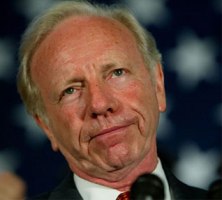
U.S. Sen. Joe Lieberman says The New York Times may have committed a crime by publishing government documents from WikiLeaks, and he has asked that the Justice Department investigate, according to a report by The Hill.Open and candid, it's no wonder Joe Lieberman ranks up there as one of our best politicians.
"To me, New York Times has committed at least an act of bad citizenship. And whether they've committed a crime, I think that bears very intensive inquiry by the Justice Department," said Lieberman, a Connecticut independent who caucuses with the Democrats.
The lawmaker told Fox News that he wonders why WikiLeaks founder Julian Assange has not been charged with treason.
“I don’t understand why that hasn’t happened yet. It sure looks to me on the facts that Mr. Assange and WikiLeaks have. He ought to be indicted and then we can ask the authorities in England to extradite him to the United States.
“I think it’s the most serious violation of the Espionage Act in our history, and the consequences globally that have occurred," he said.

Hillary Clinton, Julian Assange said, "should resign." Speaking over Skype from an undisclosed location on Tuesday, the WikiLeaks founder was replying to a question by TIME managing editor Richard Stengel over the diplomatic-cable dump that Assange's organization loosed on the world this past weekend. Stengel had said the U.S. Secretary of State was looking like "the fall guy" in the ensuing controversy, and had asked whether her firing or resignation was an outcome that Assange wanted. "I don't think it would make much of a difference either way," Assange said. "But she should resign if it can be shown that she was responsible for ordering U.S. diplomatic figures to engage in espionage in the United Nations, in violation of the international covenants to which the U.S. has signed up. Yes, she should resign over that."Here's the real deal: would the smug a-hole that is Julian Assange and WikiLeaks be getting away with all this treachery under the Bush administration? It's an easy card Republicans need to play.
Assange spoke about the latest tranche of documents from WikiLeaks in a 36-minute interview with TIME (the full audio will be available soon on TIME.com). He said there would be more: "We're doing about 80 a day, presently, and that will gradually step up as the other media partners step in." Indeed, every region of the world appears to be bracing for its turn in the WikiLeaks mill. Pakistani officials are almost certain that more revealing documents focusing on their country will come out soon. And the Russian media are anxious to see if future leaks will detail any behind-the-scenes dealings over the August 2008 Russia-Georgia war.


 Posts
All Comments
Posts
All Comments


