Fox News host Bill O'Reilly brought Rep. Paul Ryan (R-Wis.) on "The
O'Reilly Factor" Tuesday to discuss charges of racism made by Rep.
Barbara Lee (D-Calif.) against the former vice presidential candidate.
In
recent remarks on poverty, Ryan referred to the "tailspin of culture in
our inner cities." Lee in turn called Ryan's comments a "thinly veiled
racial attack."
“Let’s be clear, when Mr. Ryan says 'inner city,'
when he says, 'culture,' these are simply code words for what he really
means: 'black,'" Lee said in a statement.
On
O'Reilly's show, Ryan said he has no bad feelings toward Lee, noting
he's "a big boy" and understands that "if you challenge the status quo,
sometimes you'll be misinterpreted."
O'Reilly fervently
disagreed, saying "race hustlers" such as Lee don't want to have a
conversation and that they "get voted into office by portraying their
constituents as victims."
"And it's all your fault and it's my
fault and it's rich people's fault and the Republicans' fault," O'Reilly
said. "It's everybody's fault except what's going on ... The race
hustlers don't want to solve the problem."
Watch the full exchange above.
UPDATE: 12:58 p.m. -- Lee released the following statement in response to O'Reilly's remarks:
Unfortunately
we’ve come to expect language like “welfare queens,” “food stamp
president,” and now “race hustlers” from the right wing and Mr.
O’Reilly. It is disgusting and divisive and should never be accepted in
our national discourse.
For us to achieve the American dream for
all, we must engage in this conversation that has been sparked about
race and poverty, even if it is difficult for some. Racial
discrimination, poverty, and income inequality remain issues that must
be debated and addressed, and these kinds of ‘code words’ only get in
the way of solving the real problems.
As members of Congress, we
must come together to present a budget and funding priorities that
create opportunity for all. We must make critical investments in job
creation, education, and job training. Among many issues, we must
address extending unemployment insurance, raising the minimum wage,
enacting criminal justice reform, and securing voting rights for
communities of color, so that we can truly find solutions to these
critical issues.
A new poll
shows a majority of New York voters oppose tuition assistance for
illegal immigrants. The data, collected by the Siena College Research
Institute, comes days after a version of the Dream Act, doing just that,
failed to pass the New York Senate. The bill provides an estimated $20
million through TAP (Tuition Assistance Program) to undocumented
students:
OSC estimates that TAP awards to undocumented students would have cost $20 million
if the New York State DREAM Act were in effect in the current year
based on the conservative assumptions that all full-time students would
apply for TAP and receive the maximum award.
The poll itself
shows that, of the 56% that oppose the Dream Act, a majority of
moderates, 18 to 34 year olds, and people in an "other" party also
oppose the bill.
This revelation should signal to serious lawmakers that the time has come to oppose laws that favor law-breaking over legal, tax-paying citizens. When 76% of legal New York State college students do not have access to tuition assistance, does it make sense to spend more
money on "undocumented" students? The tide of discontent among U.S.
taxpayers should send a signal to idealistic, left-wing politicians that
think the rights of undocumented immigrants should supersede those of
the American citizen.
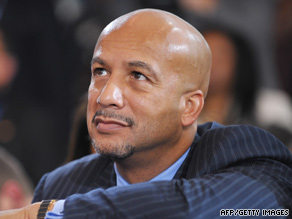
So it turns out
that Ray Nagin, the Democratic ex-mayor of New Orleans best known for
his furious denunciations of the Bush administration in their response
to Hurricane Katrina, wasn’t exactly acting with the city’s best
interests at heart himself. The guy left office in 2010 with
bottom-of-the-barrel approval ratings
and insisted that he wouldn’t be running for political office again —
and I think this just about seals the deal on that. The sentencing is
still to come, but each of the 20 charges of which he was convicted
carries a sentence of at least several years, and he could be looking at
a nice long prison term. Via CNN:
Former New Orleans Mayor Ray Nagin, whose desperate pleas
for help during Hurricane Katrina drew national attention, walked
silently out of a courthouse Wednesday after a jury convicted him of
federal corruption charges.
Nagin was elected as a reformer in 2002. But after a two-week trial
that began in late January, he was found guilty of 20 out of 21 counts
of bribery, money laundering, fraud and filing false tax returns,
according to the U.S. Attorney’s Office. The sole acquittal was on one
of the bribery counts. …
The charges detailed more than $200,000 in bribes to the mayor, and
his family members allegedly received a vacation in Hawaii; first-class
airfare to Jamaica; private jet travel and a limousine for New York
City; and cellular phone service. In exchange, businesses that coughed
up cash for Nagin and his family won more than $5 million in city
contracts, according to the January 2013 indictment.
In a nutshell, he used the opportunity of the Katrina recovery effort
to kick city contracts back to any vendors that offered to sweeten the
deal, while simultaneously blustering about the incompetence and
corruption of everybody else’s post-Katrina commitment. What a swell
guy.
Anybody who understands the true dichotomy of Godless, white liberals shouldn't be surprised at this:
Supreme Court Justice Clarence Thomas spoke at Palm Beach Atlantic University on Tuesday, and used the occasion
to say the United States is still way too sensitive about racial
issues, lamenting how much “more race and difference-conscious” the
country is now than in the 1960s. He said race “rarely” came up when he
became the first black child to go to a white school in Savannah,
Georgia.
Nowadays, however, you can’t escape people being overly sensitive
about race and sex, Thomas said, and revealed that he was treated much
worse Northern liberals than by anyone in the South.
“The worst I have been treated was by northern liberal
elites. The absolute worst I have ever been treated,” Thomas said. “The
worst things that have been done to me, the worst things that have been
said about me, by northern liberal elites, not by the people of
Savannah, Georgia.”
Fox News host Mike Huckabee sat down with colleague Megyn Kelly
on Friday to clear the air about his controversial comments on birth
control, saying that he was saying nothing disparaging about women or
access to birth control, and was simply going after what he called the
canard of the “war on women” Democrats have been going on about for
years.
Kelly grilled Huckabee a little, bringing up criticisms that he
completely misrepresented the Democratic position that people need birth
control for medical issues and so they can be responsible. Huckabee
made it clear that he’s not opposed to giving women access to birth
control, “it was about Democrats and this phony war on women that they
have pretended Republicans have.”
Kelly brought up a number of health reasons why women need birth
control, and told Huckabee people just don’t like the insinuation birth
control means someone is “controlling” women’s bodies. Huckabee insisted
he was not trying to put down women, because he believes they’re
“equals to men,” and he took a shot at the reporters who “tried to
reduce this entire issue to a tweet.”
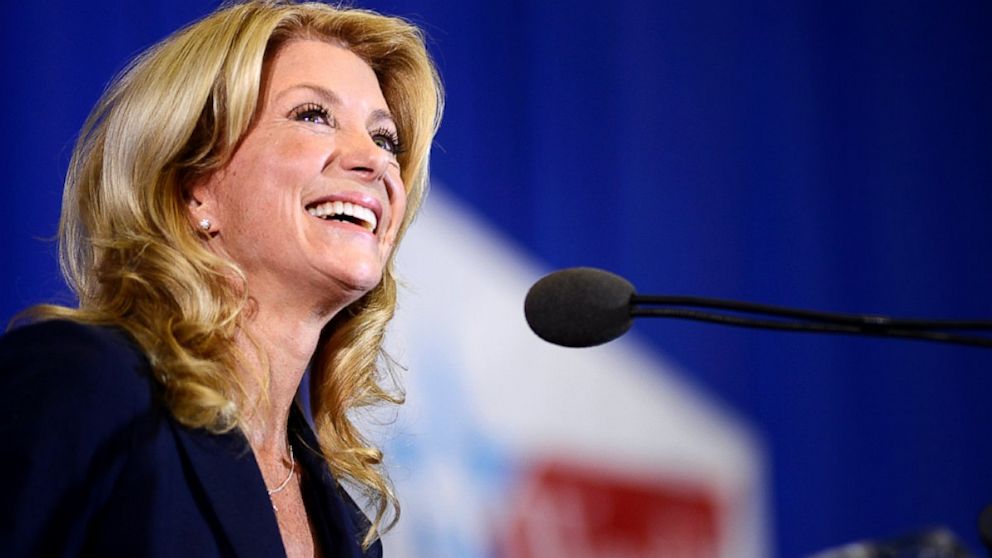
Texas state Sen. Wendy Davis, who is running for governor of Texas,
has admitted that some of the public details about her personal history
are incomplete or inaccurate, according to a report in the Dallas
Morning News.
Davis, a rising Democratic star, has touted herself as a Texas
success story. She has said she was a divorced teenage mother who went
from living in a mobile home, juggling low-wage jobs and going to
community college to graduating from Harvard Law School.
The up-from-nowhere narrative, which emerged during an 11-hour
filibuster she staged in June to oppose abortion restrictions, has been a
central part of her candidacy and appeal, helping to boost her national
profile and fundraising efforts.
But the Dallas Morning News reveals a more complicated narrative.
According to the paper, Davis was not a divorced working mother
living in a mobile home at age 19. Instead, she was 21, and lived in a
trailer for a short time. Then after a stint living with her mother,
Davis moved into her own apartment.
At 24, she married Jeff Davis, a lawyer who, according to the report,
helped pay for her final two years of college and cashed out his 401(k)
and took out loans to help finance her Harvard law degree.
The marriage eventually ended in divorce, with Jeff Davis getting
custody of the couple’s youngest daughter and Wendy Davis paying monthly
child support.
In an extensive interview with the paper, Davis said she had focused
on general themes in her personal history, rather than being precise.
“My language should be tighter,” she said. “I’m learning about using
broader, looser language. I need to be more focused on the detail.”
She added: “Most people would identify with the fact that we tend to
be defined by the struggles we came through [rather] than by the
successes. And certainly for me that’s true,” she said. “When I think
about who I am and how it’s reflected in the things I worked on, it
comes from that place.”
First, the central question. Did Hoboken get fewer Sandy funds than
it needed or deserved? Are there actual damages to which one might tie
this alleged political corruption? The original MSNBC report played fast
and loose with the numbers to leave that impression, but the reality is
Hoboken got millions in relief funds, but perhaps not in the exact
amounts Zimmer was requesting. Guy Benson:
The original MSNBC story leaves the distinct impression
that the city received less than $350,000 in aid out of a $127 million
request. In fact, Christie’s office points out, Hoboken has benefited
from nearly $70 million in federal and state recovery and relief funding
— which they say is commensurate with aid received by similarly
situated municipalities. They emphasize that not a single grant
application from Hoboken was denied.
MSNBC’s report, Christie aides say,
conflated total aid with the much narrower issue of “hazard mitigation”
funds. They concede that Zimmer did, in fact, request more than $100
million in hazard mitigation assistance — which at the time accounted
for more than one-third of the entire available budget allocated for
that purpose.
Her story has changed. First, it was that Christie withheld Sandy
funds because she didn’t endorse him, according to this New Jersey
reporter:
8 days ago Hoboken Mayor told @WNYC & @GonzalezSarahA her loss of Sandy aid was tied to failure to endorse @GovChristie. Now different story
In the second version of the story, the retaliation is over a development deal. Zimmer waited almost a year to reveal the Christie administration’s
alleged strongarming, leaving it hidden even as he ran for reelection.
She tweeted awfully nice things in August about a guy who had allegedly threatened her city:
Some of the alleged strongarming took place on a TV set, with
Department of Community Affairs Commissioner Richard Constable, where no
audio or video of the conversation was captured. Now, one of the eye
witnesses to that encounter, a fellow Democratic mayor, says no such thing went down.
Zimmer, a Democrat, stuck by her story Sunday. She said
her conversation with Constable occurred May 16 at Monmouth University
prior to their appearance as panelists on a TV event produced by NJTV.
NJTV doesn’t have any pre-broadcast audio records from that event, said Debra Falk, a spokeswoman.
Belmar Mayor Matt Doherty, who also was a panelist, said he didn’t hear a conversation between Zimmer and Constable.
“I sat next to Mayor Zimmer and, if I recall correctly, (Constable) was on my other side,” Doherty said.
Doherty, also a Democrat, said Belmar hasn’t faced delays in receiving recovery money.
“The administration has always been cooperative and professional and
encouraged us to contact them right away if there’s anything we need,”
Doherty said.
Zimmer brought her story to light on MSNBC on Saturday and in an
interview on CNN said the alleged quid pro quo offer from the
high-ranking administration was “a direct message from the governor.”
If Christie’s not your 2016 cup of tea, fine. If it turns out he did
know about Bridgegate after claiming not to, he’s in serious trouble.
Plenty can oppose him for either of those reasons, but until Zimmer has
something more than her own diary entries, which contradict eye
witnesses and her own tweets, this should not be the story that turns
anyone against him.
Bill O’Reilly has no doubts about why Chris Christie is being targeted so strongly in the media and especially by Democrats: he is the “biggest threat” to the left, and so “the politics of destruction” are being thrown into overdrive in order to delegitimize him with “BridgeGate” and thereby ensuring he is not a serious challenger to Hillary Clinton in 2016. O’Reilly didn’t say the scandal is irrelevant, but he did say it’s very much overblown.
O’Reilly argued that Mitt Romney lost in 2012 because he was too much of a “gentleman” and wasn’t tough enough on issues like Benghazi, and so the tough Christie is “a threat to the power of the Democratic party” because of his reputation for blunt honesty. Ans so, he is being “marginalized” by Democrats “using his bluster against him.”
O’Reilly said, “If you are passionate and state your position firmly and flamboyantly… you become a big target.” He also noted that Democrats are more nervous about Christie than they are about more conservative potential candidates.
U.S. Bankruptcy Judge Steven Rhodes has ruled that Detroit, Mich., may
seek to protect itself from its creditors under Chapter 9 municipal
bankruptcy protection, thus making this once proud city the largest
municipality in American history to go bust.
The city is $18 billion in the hole thanks to its debt and long-term
liabilities, such as pensions it could not afford and people abandoning
the city in droves, which led to an erosion of the tax base.
It didn't have to be like this. There were signs of Detroit's decline
that began as early as the 1950s, but politicians don't like telling
voters "no" when it comes to government freebies and benefits. They want
the votes.
Last September, the Detroit Free Press printed an extensive analysis of
the city's financial history over the past 60 years. It found that
instead of making difficult economic and political decisions, which
might have strengthened Detroit's financial foundation, "...amid a huge
exodus of residents, plummeting tax revenues and skyrocketing home
abandonment, Detroit's leaders engaged in a billion-dollar borrowing
binge, created new taxes and failed to cut expenses when they needed to.
"Simultaneously," reported the newspaper, these leaders "gifted workers
and retirees with generous bonuses. And under pressure from unions and,
sometimes, arbitrators, they failed to cut health care benefits --
saddling the city with staggering costs that today threaten the safety
and quality of life of people who live here."
Most of the recent mayors of Detroit have been Democrats. Some have gone
to jail on corruption charges, but they don't get the same level of
attention from the national media as they might have had they been
Republicans. Stirring the political pot to avoid perpetual one-party
rule would have been a good way to reduce corruption and the problems
Detroit has experienced under Democrats.
Washington, D.C., which has had only Democratic mayors and a majority
Democratic city council since the 1960s when Congress gave residents the
right to vote for their local leaders, is another city with several
corrupt politicians. As in Detroit, Washington, D.C.'s policies appear
to have ensured a permanent underclass Democrats can count on for votes,
as long as government handouts keep coming.
While there have been periods of economic growth in Detroit over the
past 50 years, politicians did not use the money wisely and many
opportunities to alter the city's downward trajectory toward more
benefits, higher debt and the discredited notion that constantly raising
taxes would stop the bleeding were missed.
The one flaw in the Free Press analysis is this line: "Although no one
could see it at the time, Detroit's insolvency was guaranteed." It isn't
that no one could see insolvency coming; it is that they refused to do
so. Their attitude was "eat, drink and be merry for tomorrow we die."
And so Detroit has succumbed to financial ruin.
There is a grand lesson here not only for other urban cities faced with
similar problems, but for states and especially the federal government
that don't want to deny anyone anything, especially in an election year.
The lesson is an obvious one, buried deep in our Puritan ethos: You
can't spend more than you take in, as though tomorrow will never come.
If you do, your tomorrow might just look a lot like Detroit's.
Last summer, Beyonce visited Detroit where she performed a live concert
and recorded a video reminding the city of its illustrious past. The
song she sang in the video was Sam Cooke's "A Change Is Gonna Come"
while behind her a huge neon sign read "Nothing Stops Detroit."
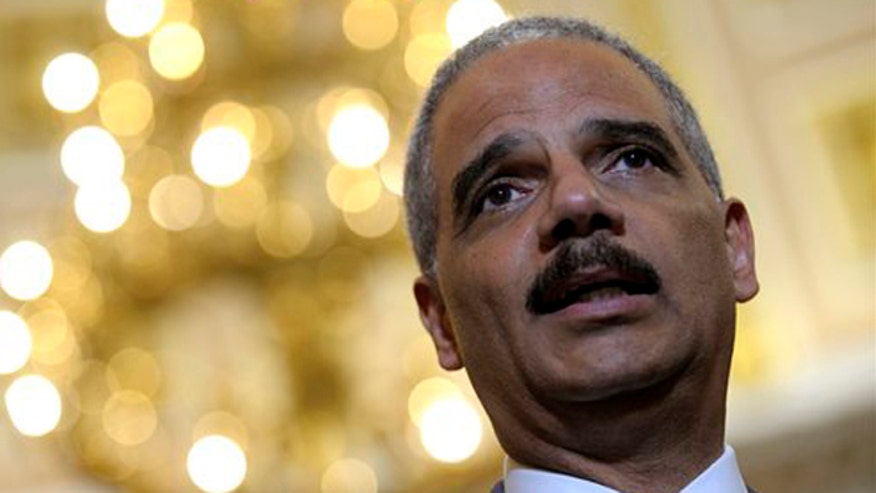
A group of congressional Republicans introduced a resolution Thursday
to call for the impeachment of Attorney General Eric Holder, alleging
Holder had committed “high crimes and misdemeanors” during his tenure as
head of the Justice Department.
The resolution was introduced by Rep. Pete Olson, R-Texas, who claims
Holder has committed “the offenses of lying to Congress, refusing to
comply with a subpoena, and failing to fulfill his oath of office.”
Olson cites Holder’s unwillingness to cooperate during the
investigation into the botched Operation “Fast and Furious, his refusal
to prosecute those involved IRS targeting of conservative groups, his
failure to enforce laws including the Defense of Marriage Act, and his
“false testimony” about the DOJ’s monitoring of Fox News journalist
James Rosen as articles that are grounds for impeachment.
“For nearly five years, Attorney General Holder has systematically
deceived Congress and destroyed the credibility of the Justice
Department in the eyes of the American people,” Olson said in a
statement.
Olson was joined by 19 other Republican representatives in the resolution.
One House Democrat spoke out against the resolution before it was
introduced Thursday, calling it “the most fundamental abuse of the
impeachment power.”
Rep. Adam Schiff, D-Calif., a former federal prosecutor who led the
Senate in the impeachment of a federal judge in 2010, said the articles
of impeachment in the resolution are simply a list of “debunked
conspiracy theories.”
Days after a Republican was elected mayor of Annapolis, City Council
members say they will revisit legislation that would strip the mayor's
office of much of its power.
Democratic Alderman Ross Arnett of Ward 8 tells The Capital he will
introduce a charter amendment to move Annapolis to a council-manager
style of government. The city manager would report directly to the City
Council, not the mayor.
Under Arnett's legislation, the mayor's post would be largely
ceremonial. The mayor would retain a single vote on the council. Arnett
says the change would stabilize the city's management.
If the measure is approved, it would mean the Democratic-dominated
council would be removing the powers of the first Republican mayor
elected since 1997.
Last week, Republican Mike Pantelides defeated Democratic incumbent Josh Cohen.
A
broken promise, plunging poll ratings and the disastrous start for
HealthCare.gov have rattled President Barack Obama’s party, and the
impatient rank and file want solutions, not just an apology, from the
commander in chief.
“There’s a brewing revolt among Democrats,” said one member of
the House Democratic Caucus who spoke on the condition of anonymity in
order to describe the scene at Wednesday’s closed-door meeting, where
members vented their frustration at White House officials for the rocky
rollout of the Affordable Care Act.
White House Press Secretary Jay Carney insisted Wednesday that
the administration remains on track to fix the troubled website by the
end of the month, and he said Obama would decide “sooner rather than
later” how to ease the burden on the millions of Americans whose health
insurance policies have been canceled in spite of his oft-repeated
promise that “if you like your plan, you can keep it.”
But Obama’s fellow Democrats have started to lose faith, and
time is of the essence: The House will vote Friday on a GOP bill that
would allow insurance companies to revive scrapped health insurance
policies. Unless Democrats are certain that a remedy is on the way, many
will be inclined to vote “yes.”
“We’ve got a problem, and we gotta fix it, and we’re looking for what the White House response is gonna be,” said Rep. Peter Welch, D-Vt., who still hasn’t decided how he will vote on the bill sponsored by Energy and Commerce Chairman Fred Upton, R-Mich.
“I think in diplomatic terms we had a frank discussion,” said Rep. Jim Costa,
D-Calif. “I think there was a lot of frustration and, in some cases,
anger vented towards the White House for their continued ham-fisted
approach. It’s not just their credibility that’s on the line, but it’s
our credibility.”
“Why can’t we call people who know how to do these things, who
do it for corporate America, and say, ‘We have a website, fix it?’”
asked Rep. José E. Serrano, D-N.Y. “Maybe I’m being simplistic, but
can’t we call Bill Gates up and say, ‘Take care of this?’ Or go to a
college dorm and say, ‘You guys, you invented Yahoo, can you take care
of this?’”
And that Nov. 30 deadline?
“Don’t come here telling us it will be fixed by Nov. 30,” Serrano said.
Many Democrats had kept their concerns about the health care
law to themselves because they were promised that the political price of
passing a piece of monumentally controversial legislation would be
worth it in the end. No more.
Rep. James P. Moran,
D-Va., said it’s not clear whether the White House is up to the “heavy
lifting” required to bring the law to fruition and have it function the
way its advocates intended.
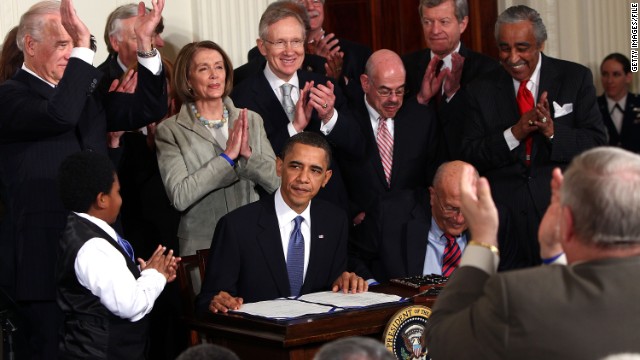
“Nancy had to push this through,” Moran said, referring to House Minority Leader Nancy Pelosi,
who shepherded the health care law to passage in March 2010 as speaker.
“There was a long period where I know our leadership felt that the
White House could have been promoting this better and also clarifying
what they meant to a better extent that they did. And while we can do
the lifting of the legislation, they have to do the heavy lifting of the
implementation. That’s their job.”
“On the one hand, I am concerned that by voting for it, it
undermines the basic reforms we worked so hard to get in the ACA,” said
Rep. Gerald E. Connolly,
D-Va., who said he was “wrestling” with how he would vote on Friday.
“And I have to weigh that concern against ‘but you promised.’”
New Jersey State Senator Barbara Buono delivered her concession speech shortly after her campaign rival Governor Chris Christie
was declared the winner of the gubernatorial election. In her speech,
Buono took multiple shots at the “Democratic political bosses” in New
Jersey for their “betrayal” of her campaign.
Buono said her campaign “took on the bosses in the political machine
that have defined New Jersey politics for far too long,” and
specifically went after Democratic leaders for sabotaging her campaign.
“The Democrat political bosses––some elected, some not,
made a deal with this governor, despite him representing everything
they’re supposed to be against. They didn’t to it to help the state.
They did it out of a desire to help themselves politically and
financially.”
A few minutes later, Buono praised her staffers, saying they “withstood the onslaught of betrayal from our own political party.”
Newly uncovered IRS documents show the agency flagged political
groups based on the content of their literature, raising concerns
specifically about "anti-Obama rhetoric," inflammatory language and "emotional" statements made by non-profits seeking tax-exempt status.
The
internal 2011 documents, obtained by USA TODAY, list 162 groups by
name, with comments by Internal Revenue Service lawyers in Washington
raising issues about their political, lobbying and advocacy activities.
In 21 cases, those activities were characterized as "propaganda."
The
list provides the most specific public accounting to date of which
groups were targeted for extra scrutiny and why. The IRS has not
publicly identified the groups, repeatedly citing a provision of the tax
code prohibiting it from releasing tax return information.
More than 80% of the organizations on the 2011 "political advocacy
case" list were conservative, but the effort to police political
activity also ensnared at least 11 liberal groups as of November 2011,
including Progressives United, Progress Texas and Delawareans for Social
and Economic Justice.
The IRS controversy first exploded in May,
when Exempt Organizations Director Lois Lerner admitted that the IRS had
targeted Tea Party groups for additional scrutiny beginning in early
2010. The IRS placed a hold on those applications for more than 20
months, an inspector general's investigation found.
“I really believe the Democrat Party needs a permanent underclass. They
need a permanent dependent class of people low-educated, low-wage,
low-skill dependent on government. They need that. Now as Americans
climb the ladder of success and elevate themselves through the middle
class and are less dependent on government, the Democrat races to
replace them. They clearly see 11 million votes here.”
- Conservative radio host Rush Limbaugh on immigration reform
Student of Life, lover of God, Black, conservative Democrat, believer in self-responsibility, traditional values and morals, resident of New York City. Follow me on Twitter at @MrGreyGhost1.











 Posts
Posts

