


A New York Moment: Ruby, Jules & Me
3 years ago


The Obama campaign and cable "news" network MSNBC shared more than a mere slogan this presidential cycle. Neither entity had a single negative thing to say about the incumbent president over the closing week of the campaign. By definition, it was Team Obama's job to portray the president in a unflinchingly favorable light -- but what exactly is the NBC-owned channel's mission statement? Fox News is often accused of being a little more than a right-wing spin machine, particularly during its opinion programming. Fox's overall coverage of the campaign tilted heavily in favor of Mitt Romney during the home stretch, with some "fair and balanced" negative coverage of the Republican and positive reporting about the president sprinkled in for good measure. MSNBC went the full Pravda. Via Pew Research:RELATED: Pew media study: Obama’s coverage improved dramatically in the final week of the race
Not a single MSNBC story about Mitt Romney was positive -- not one. Meanwhile, zero segments about the president were negative. Allahpundit reaches into the word bag and grabs an entirely appropriate description of Pew's data reflected graph above: "Indistinguishable from propaganda." He also notes that the Benghazi controversy was in full swing over this time period, indicating that MSNBC couldn't find anything critical to say about the Obama administration, even regarding its disgraceful handling of a preventable terrorist attack that claimed the lives of four American diplomats. As I reported yesterday, the MSNBC crew is now accusing critics on this front of engaging in "conspiracy" theorizing. In short, the network has essentially given up trying to even pretend to anything other than a house organ of the professional left. At what point are they no longer considered a news outlet? I'll leave you with this chart from Pew, demonstrating that overall media coverage of Barack Obama and Mitt Romney moved in opposite directions in the week directly preceding the election. Surprise:
What's more, Obama received substantially more coverage than Romney during this time frame (80 percent to 62 percent). So the incumbent enjoyed increased and more positive coverage as voters finalized their decisions; his challenger was mentioned less, but when he was covered, those mentions were twice as likely to be negative than positive. Whining about media bias is a useless enterprise for conservatives. It's a fact of life that isn't going away any time soon. Republican politicians should recognize this reality and plan accordingly. But it's also preposterous for people to continue to claim that this bias doesn't exist. Sure, improved polling and the Sandy photo-ops goosed Obama's numbers in the chart above, but that doesn't explain the sharp negative turn of the Romney coverage. The media is generally populated by liberal Democrats who wanted Obama to win. Whether it's deliberate or subconscious, this mentality slants coverage. The American people understand this more than ever -- which is why it's inaccurate to pin Romney's loss on slanted journalism. It was a contributing factor, of course, but there were many bigger issues at play. That said, a 2011 UCLA study has posited that media bias increases Democrats' popular vote total by eight to ten percentage points in any given election season. That might sound extreme, but ask yourself this question: If a Republican incumbent were facing roughly eight percent unemployment, and much higher "real" unemployment -- all while adding more than $5 trillion to the national debt and breaking virtually every major promise he'd made during his previous campaign, would this election have even been close? Probably not. He'd have long since been declared a failure, and the resulting coverage would have been a build-up to the coronation of his opponent. Benghazi and its cover-up would have been a massive, eleventh-hour feeding frenzy; a final nail in the coffin. But Democrats preside over a different media climate, so forward to four more year we go.

It’s traditional for Americans to threaten to move to France or Canada when their candidate loses, but this year some disappointed voters are implementing a different plan.
In the wake of the Nov. 6 election, petitions seeking to secede from the union have been filed on behalf of 23 states on the White House website, https://petitions.whitehouse.gov/petitions. Most of the petitions contain the same wording and ask to withdraw “peacefully” from the United States in order to form independent governments.
Critics describe the effort as a bit of an overreaction. “Anyone who wants their state to secede from the union is someone whose brain has already seceded from their body,” said John Andrews, director of the conservative Centennial Institute at Colorado Christian University.
Still, the White House may have to take the requests seriously. According to the website, any petition receiving 25,000 online “signatures” on the “We the People” page within 30 days of posting will receive a review by the appropriate executive department and a response from a White House staffer.
As of Monday, the Texas petition had already exceeded the 25,000-signature threshold, and the Louisiana petition was fast approaching the cutoff with more than 18,000 signatures. Most of the petitions were posted online Nov. 10, which means they have until Dec. 10 to qualify for a response.
It’s impossible to tell from the website who is behind the drive, given that those signing the petition only use their first names, last-name initials, and city and state of residence. The website does show that most petitions include the John Hancocks of signers from other states.
Steve Eichler, CEO of TeaParty.org, said his organization isn’t involved with the petition drive, but added that he wouldn’t be surprised if tea party advocates were at the root of it.
“We have not put out anything seceding from the United States, but the feedback we’re getting shows that people believe that their elected state leaders are more in tune with their needs than those of the federal government,” said Mr. Eichler.
He added that support for secession has cropped up in comments on the organization’s blogs. “People are feeling disenfranchised, they’re feeling a loss of voice, and they just don’t know what else to do,” he said.

It's one thing for a Democratic presidential candidate to dominate a Democratic city like Philadelphia, but check out this head-spinning figure: In 59 voting divisions in the city, Mitt Romney received not one vote. Zero. Zilch.RELATED: Philly poll workers partially cover Obama mural after court order, leaving logo and quote in view
These are the kind of numbers that send Republicans into paroxysms of voter-fraud angst, but such results may not be so startling after all.
"We have always had these dense urban corridors that are extremely Democratic," said Jonathan Rodden, a political science professor at Stanford University. "It's kind of an urban fact, and you are looking at the extreme end of it in Philadelphia."

One again, Blacks voted for Obama in “mass quantities.” Some put the number at 95 percent, although I’ve seen a number around 92 percent. The Black vote in the Philadelphia wards was off the charts. One article carried this headline, “Vote was astronomical for Obama in some Philadelphia wards,” even though another article reported in September of this year that “[p]overty rose significantly in Philadelphia and its surrounding counties over the last two years, while the city’s median household income in 2011 ranked second-worst among the nation’s 25 largest cities.”RELATED: Black Voters Made Lasting Impact On Historic Election
These areas are deeply affected by policies that are championed by the Democrats. Have the majority of blacks benefited by decades of calls for more poverty programs and and wealth transfer incentives? When you have time, read the article “Philadelphia’s Poverty Problem” that was published online in PhillyMag in 2010. It’s heart wrenching:
More than a third of the city’s kids don’t graduate from high school . . . . Sixty percent of the city’s children are born out of wedlock. A third grow up in poverty. Philadelphia, recent stats say, is America’s poorest big city.Which hurts all of us. Consider the problems just on a practical level: It’s tough to attract new business to the city when so much of it is dangerous, when we lack an educated workforce.We lose out on tax revenue. We end up spending more — billions more — on prisons and services trying to resurrect our poorest people than we would in tackling some of their problems head-on.No doubt some Blacks break free from the conditions that they were born into, as the above article points out. They beat some very bad odds, but they are expected to stay with the liberal insistence that a strong central government managed by caring political party is their way out of poverty, and woe to any “minority” who says otherwise. Black and Brown people who support Republicans are said to be “window dressing.”
Remember how Stacey Dash was savaged by blacks for her support of Mitt Romney? Consider these comments by Joy-Ann Reid, an on-air contributor at MSNBC:
They just think they need to put more window dressing on it, and find some more black and brown people to say the exact same things they believe. They don’t believe they need to change their positions on issues. They just believe they need to change the decoration.


A shot of optimism after a day of eeyorish state polls. How does Rove arrive at this result when eight of the last nine Ohio surveys have O ahead? In two steps: (1) He clearly trusts the national data over the state data, and (2) he cites historical numbers showing that incumbents recently have tended to overperform their national polling on election day by only one percent or so. Obama’s tied with Romney in the RCP national average tonight at 47.4. If, per the historical data, O’s ceiling is therefore at 48 percent, then it follows that most everyone else will break for Romney and that his national advantage will carry him to narrow wins in the states he needs.RELATED: Opinion: Here comes the landslide
As for Ohio:
Adrian Gray, who oversaw the Bush 2004 voter-contact operation and is now a policy analyst for a New York investment firm, makes the point that as of Tuesday, 530,813 Ohio Democrats had voted early or had requested or cast an absentee ballot. That’s down 181,275 from four years ago. But 448,357 Ohio Republicans had voted early or had requested or cast an absentee ballot, up 75,858 from the last presidential election.That 257,133-vote swing almost wipes out Mr. Obama’s 2008 Ohio victory margin of 262,224. Since most observers expect Republicans to win Election Day turnout, these early vote numbers point toward a Romney victory in Ohio. They are also evidence that Scott Jennings, my former White House colleague and now Romney Ohio campaign director, was accurate when he told me that the Buckeye GOP effort is larger than the massive Bush 2004 get-out-the-vote operation.Democrats explain away those numbers by saying that they are turning out new young Ohio voters. But I asked Kelly Nallen, the America Crossroads data maven, about this. She points out that there are 12,612 GOP “millennials” (voters aged 18-29) who’ve voted early compared with 9,501 Democratic millennials.Are Democrats bringing out episodic voters who might not otherwise turn out? Not according to Ms. Nallen. She says that about 90% of each party’s early voters so far had also voted in three of the past four Ohio elections.In other words, the dam that O’s built among early voters simply isn’t tall enough to hold back the red tide next Tuesday. One caveat to Rove’s point about the national numbers, though: According to RCP, Obama’s either tied or ahead in seven of the last 10 national polls taken. Romney still leads in Rasmussen and Gallup, and in only three of those 10 does Obama reach 49 percent or higher, but things have evened out a bit after Romney’s post-Denver debate surge. Case in point is the new Fox News poll tonight, which has the race dead even at 46 after Romney led by a point in early October. The topline number is not so good for Mitt, but the fundamentals are:
Independents give the edge to Romney by seven percentage points (46-39 percent). That’s down from a 12-point advantage in early October…Among the subgroup of most interested voters, those who are “extremely” interested in the election, Romney leads Obama by 53-42 percent…Romney’s supporters continue to be more enthusiastic: 69 percent say it’s extremely important he win, while 59 percent of those backing Obama feel that way.


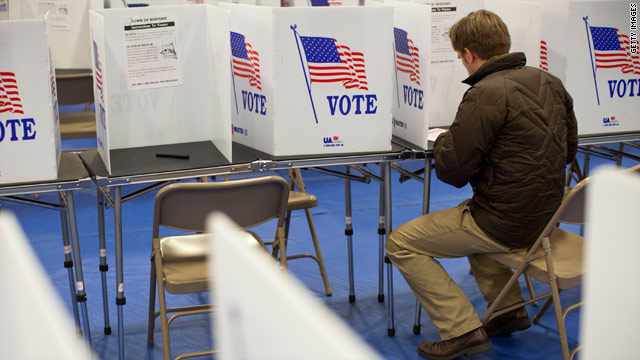
In spite of a Washington Post poll showing 74 percent of Americans favor government-issued photo ID mandates at polling places, CNN skipped those numbers this past week in six separate segments on voter ID laws.
As a Mediaite study noted, MSNBC aired 19 segments on voter ID laws from Monday through Thursday without mentioning the poll. While CNN's coverage was largely balanced, the poll numbers still should have been reported in their discussions on voter ID laws.
In one instance of liberal bias, anchor Fredricka Whitfield teed up liberal guest Professor Jonathan Turley on Thursday by asking if ID laws were "a solution in search of a problem."
"And a number of reports show however that voter fraud is actually not much of a problem. So is this a solution in search of a problem?" she asked Turley, who responded that "a national study found that voter fraud is virtually nonexistent when they looked at the 2000 election."
On Friday's The Situation Room, CNN hyped "growing outrage" over new voter ID laws.RELATED: Pennsylvania civil rights coalition appeals ruling in voter ID case
Voter ID is a topic CNN has tackled before – with liberal gusto. For instance, anchor Zoraida Sambolin asked former U.N. Ambassador Andrew Young the other week if new voter ID laws might " suppress the minority vote."
Anchor Carol Costello asked a La Raza chairman last month "Is there a war on minority voters in this country?" while discussing a Texas voter ID law challenged by Obama's Justice Department.
Mitt Romney on Saturday announced U.S. Rep. Paul Ryan of Wisconsin as his running mate for the White House -- a bold and risky move that energized both conservatives and their opponents.RELATED: Romney's Choice of Ryan Aimed at Winning Middle Class
Ryan is a rising Republican star and the party's leader on fiscal and budget issues.
He is the architect of a Republican spending plan that would overhaul many entitlement programs, making him a favorite of conservatives, whose support for Romney, the presumptive Republican presidential nominee, has been shaky.
But the Romney camp was also quick to put some distance between Ryan's initial budget blueprint and his own.
"Gov. Romney applauds Paul Ryan for going in the right direction with his budget," the campaign said, "and as president he will be putting together his own plan for cutting the deficit and putting the budget on a path to balance."
His running mate choice draws some clear lines with Romney's Democratic opponents over the size of the cuts in Ryan's plan and his prior votes on taxes, which they say favor the wealthiest Americans -- a point of contention in an election in which both sides consider themselves champions of the middle class.
"Congressman Paul Ryan is an outstanding choice as our country's next vice president, and today's announcement demonstrates Governor Romney's commitment to returning fiscal sanity back to Washington, DC.," said former Pennsylvania Sen. Rick Santorum, who mounted the strongest conservative challenge to Romney's campaign in the Republican primaries.
"I have long supported Paul Ryan's fiscal and entitlement reforms to return our country back on a path of fiscal health."
Ryan, 42, is considered a policy wonk and conservative Catholic likely to energize the GOP base and sharpen the campaign's focus on government spending and the economy.
That could boost Romney's appeal among middle-of-the-road Catholic voters in battleground states such as Ohio and Pennsylvania, though Ryan offers little in the way of foreign policy experience.
The House Budget Committee chairman was chosen ahead of Sen. Marco Rubio of Florida, former Minnesota Gov. Tim Pawlenty and Sen. Rob Portman of Ohio. A campaign aide told CNN that Romney decided on Ryan on August 1. GOP sources said Friday that the latter three had all been told that they wouldn't be getting the nod.
Meanwhile, Vice President Joe Biden contacted Ryan, welcoming him to the race, saying that he "looked forward to engaging him on the clear choice voters face this November." And Democrats were quick to make Ryan's fiscal policies a target.


 Posts
All Comments
Posts
All Comments


